Pragmatism, Integrity, Passion

Pragmatism, Integrity, Passion

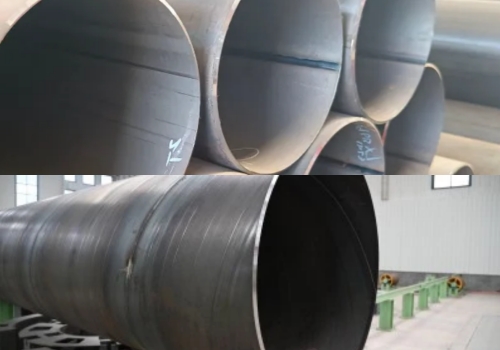
Are you struggling to choose the right steel pipe for your construction project? Picking the wrong pipe can cost you time and money. Here is the clear answer you need. The main difference between lsaw and hsaw pipes lies in their welding process. LSAW pipes have a single straight longitudinal weld, making them perfect for high-pressure oil and gas projects. HSAW pipes feature a spiral weld, offering wider diameters ideal for water distribution and structural piling.
Read on to find out which pipe will save your project budget without sacrificing quality.
Do you know how these pipes are made? A bad manufacturing method can ruin your pipeline. Let us look at how both pipes are formed from steel. LSAW pipes are made by bending a steel plate into a cylinder and welding it straight down the middle. HSAW pipes are created by rolling a steel strip at an angle and welding the edges to form a spiral seam along the pipe. As a purchasing manager, you need to know how we make these pipes at Centerway Steel. For LSAW (Longitudinal Submerged Arc Welded) pipes, we take a thick steel plate. We press this plate into a round shape. Then, we weld it in a straight line. We use double-sided submerged arc welding. This straight line means the weld is short and very strong. For HSAW (Helical Submerged Arc Welded) pipes, we use a long steel coil. We feed the steel coil into a machine at an angle. The machine rolls the steel and welds it in a spiral shape. This spiral method lets us make pipes of many different sizes using the same width of steel coil. This is why HSAW is often cheaper to produce. In my 18 years in the construction industry, I have seen that knowing this process helps buyers save money.
| Feature | LSAW Pipe | HSAW Pipe |
|---|---|---|
| Raw Material | Steel Plate | Steel Coil / Strip |
| Weld Shape | Straight line (Longitudinal) | Spiral shape (Helical) |
| Weld Length | Short (equals pipe length) | Long (much longer than pipe) |
Are you having trouble finding the right pipe size for your large-scale project? Wrong sizes cause delays. Here is how both pipes compare in size. LSAW pipes usually range from 16 to 60 inches in diameter. HSAW pipes offer a much wider range, from 20 to 100 inches. This difference in size makes HSAW pipes highly flexible for massive projects that do not require high pressure.
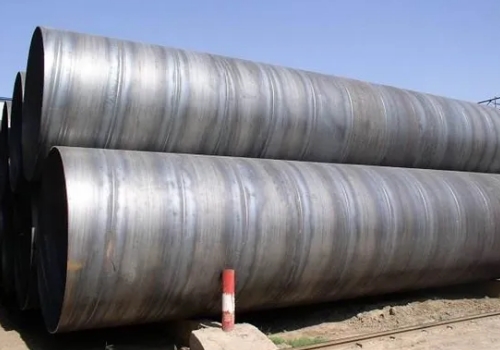
When you buy steel pipes, size is always the first thing you check. The size limits are a major difference between lsaw and hsaw pipes. Because LSAW pipes are made from single steel plates, the width of the plate limits the size of the pipe. Usually, we produce LSAW pipes with an outside diameter of 16 inches to 60 inches. If you need a very thick wall, LSAW is your best choice. HSAW pipes do not have this problem. Because we roll a continuous steel coil in a spiral, we can make the pipe very large. We can easily produce HSAW pipes up to 100 inches in diameter. At Centerway Steel, we often supply these massive HSAW pipes for big water transport jobs. They are easier to adjust during production. You do not need to change the raw material width to change the pipe size.
| Size Factor | LSAW Pipe | HSAW Pipe |
|---|---|---|
| Diameter Range | 16 inches to 60 inches | 20 inches to 100 inches |
| Wall Thickness | Very thick | Medium to thick |
| Size Flexibility | Fixed by plate width | Highly flexible |
Are you putting the wrong pipe in a high-pressure zone? This mistake can cause dangerous pipe bursts. Let us match the right pipe to your project. LSAW pipes are the best choice for high-pressure, long-distance oil and natural gas pipelines. HSAW pipes are better suited for low-pressure applications like water distribution systems, bridge piling, and general structural building works. Matching the pipe to the project is the most important part of my job. Because of their short, straight weld, LSAW pipes can handle very high pressure. They do not break easily in cold weather. This is why EPC companies and large oil brands buy our LSAW pipes for critical oil and gas transport. If a pipe carries explosive gas under a city, I always tell my clients to use LSAW. HSAW pipes have a long spiral weld. A longer weld means a slightly higher chance of tiny defects. Therefore, we do not use them for high-pressure gas lines. But HSAW pipes are fantastic for other jobs. They are perfect for moving water, building port foundations, and supporting large bridges. If you are building a water treatment plant, our HSAW pipes will do the job perfectly and save you money.
| Application | LSAW Pipe | HSAW Pipe |
|---|---|---|
| Oil & Gas Transport | Yes (High Pressure) | No (Low Pressure only) |
| Water Systems | Yes (but expensive) | Yes (Highly recommended) |
| Structural Piling | Yes | Yes (Most common) |
Worried about pipe failures after installation? Hidden cracks can cause a total system shutdown. Here is how we inspect every single pipe before shipping. LSAW pipes are easy to test fully using X-ray and ultrasonic methods because of their straight weld. HSAW pipes also use non-destructive testing, but their spiral seam makes the inspection harder, sometimes requiring destructive tests to ensure total safety.
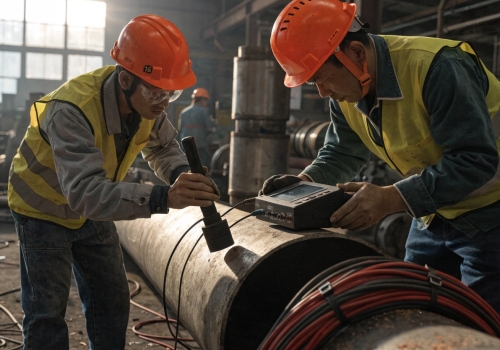
Quality control is the heart of Centerway Steel. We must make sure every pipe is safe. Testing an LSAW pipe is straightforward. The weld is a straight line. We use ultrasonic testing and X-ray machines to scan the whole line quickly. If there is a small hole or crack, we find it right away. The straight shape makes testing highly reliable. Testing an HSAW pipe takes more work. The weld goes around and around the pipe. The testing machine has to follow this spiral path. This can make the X-ray view a bit tricky. Sometimes, for very important projects, we have to cut a small piece of the HSAW pipe and break it on purpose. This destructive test proves how strong the steel is. As a buyer, you must know that LSAW gives you a higher level of safety assurance simply because it is easier to inspect.
| Testing Method | LSAW Pipe | HSAW Pipe |
|---|---|---|
| X-Ray / Ultrasonic | Very easy and accurate | Harder to scan fully |
| Defect Detection | Very high success rate | Good, but needs extra care |
| Destructive Testing | Rarely needed | Sometimes required |
Does your pipe warp during installation? Poor geometric accuracy ruins the fitting process. Understanding welding stress is the secret to a smooth pipeline build. LSAW pipes have very low welding stress and high geometric accuracy, making them perfectly round and easy to join. HSAW pipes have a larger heat-affected zone and more residual stress from the spiral process, which can affect long-term durability. When you join two pipes together on a construction site, you want them to match perfectly. This is called geometric accuracy. Another important difference between lsaw and hsaw pipes is the stress left in the metal after welding. LSAW pipes are expanded from the inside after they are welded. This step removes almost all the stress in the metal. It also makes the pipe a perfect circle. My engineering friends love this because it makes welding the pipes end-to-end very easy on site. HSAW pipes are different. When we roll the steel strip into a spiral, we trap some stress inside the metal. Also, the spiral weld heats up a larger area of the pipe. We call this the heat-affected zone. A larger heat-affected zone means the metal is slightly weaker there. While HSAW is still very strong for normal jobs, the extra stress means it is not as perfect in shape as an LSAW pipe.
| Performance Factor | LSAW Pipe | HSAW Pipe |
|---|---|---|
| Welding Stress | Very low (stress relieved) | Higher residual stress |
| Geometric Accuracy | Perfectly round, easy to fit | Good, but less precise |
| Heat-Affected Zone | Small | Large |
Choosing between LSAW and HSAW depends on your pressure needs and budget. Centerway Steel provides both, ensuring you get the perfect, high-quality pipeline solution for your next project.



 English
 Español