Pragmatism, Integrity, Passion

Pragmatism, Integrity, Passion

Harsh waves ruin weak foundations. You lose money on constant repairs. We provide strong steel pipes to secure your marine projects and save your budget. Spiral welded pipe piles for coastal structures offer continuous weld seams and excellent load-bearing capacity. These piles resist strong ocean currents and heavy structural weights. Engineers choose them to build safe docks, ports, and offshore platforms. They ensure long-term stability in extreme marine environments.
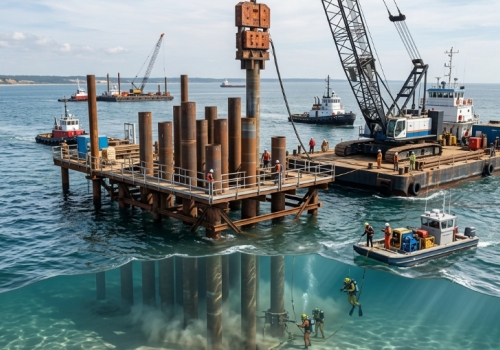
Building in seawater brings huge risks. You need materials that never fail under pressure.
Saltwater destroys normal steel fast. Your structures crack under lateral wave forces. Our spiral pipes spread stress evenly to stop cracks and block rust completely. Spiral piles feature a continuous helical weld. This design distributes weight and wave impacts better than straight-seam pipes. You can easily adjust the diameter and wall thickness. This flexibility helps you meet exact project demands while keeping material costs low.
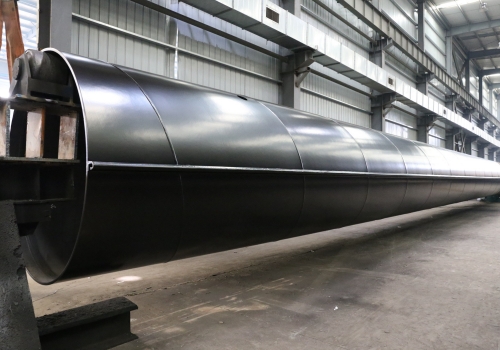
Our manufacturing process creates a continuous helical weld seam. This process improves the overall strength of the steel pipe. The spiral shape acts like a built-in reinforcement ring. It handles multi-directional forces from ocean currents and wind. You face massive horizontal loads in marine construction. Normal straight-seam pipes often fail at the weld line under such stress. Our spiral piles handle these horizontal loads easily. They bend without breaking. You also get a fantastic diameter-to-thickness ratio. We can customize this ratio to match your soil conditions perfectly.
· Excellent bending resistance against strong wave impacts
· Flexible sizing from 219mm up to 3000mm in diameter
Let us look at a direct comparison. This table shows why spiral piles win in marine environments (based on standard Q355B steel).
| Feature | Spiral Welded Pile | Straight Seam Pile |
|---|---|---|
| Stress Distribution | Highly uniform | Concentrated at seam |
| Horizontal Load | Excellent resistance | Moderate resistance |
| Sizing Flexibility | Very high | Limited |
| Production Cost | Lower | Higher for large sizes |
Soft seabed soil makes foundations sink. You face project delays. We use specific pile systems to lock your structures deep into hard rock layers. Engineers use friction piles in soft mud and end-bearing piles for hard rock bases. They combine them with concrete to form composite foundations. You can use these steel pipes as temporary supports for deep water trenches. They adapt to any difficult underwater soil condition.
We see three major ways to use these products in real life. I remember a port project where the mud went 20 meters deep. We had to use friction methods to secure the pier.
1. Friction and end-bearing systems
2. Temporary retaining walls
3. Composite foundation structures In soft soil zones, the pile transfers the heavy building load through side friction. The rough surface of the soil grips the steel. When you hit hard rock layers, the pile acts as an end-bearing support. It pushes all the weight directly into the solid earth.
Sometimes pure steel is not enough. You can mix cement and soil around the pipe. You can also pour concrete inside the pipe. This creates a composite foundation. The steel acts as a strong core. The concrete adds massive weight capacity. We often supply pipes for temporary foundation pit supports. You drive them into the seabed to hold back water and soil. Once you finish building the main structure, you can pull them out. You can reuse them on your next job. This saves you a massive amount of money.
Saltwater eats raw steel alive. Rust ruins your entire foundation within years. We apply heavy-duty coatings to block salt and add decades to your lifespan. You must protect ocean steel from fast corrosion. We use hot-dip galvanizing and heavy epoxy coatings. These thick layers stop oxygen and salt from touching the raw steel. You can use cathodic protection systems. These electrical systems stop the chemical rusting process entirely.
Seawater contains aggressive chlorides. These chemicals destroy steel fast. You cannot just put raw steel into the ocean. You need serious anti-corrosion treatments to protect your investment. I always tell buyers that cheap coatings will cost them double in maintenance later.
· 3LPE coating (three layers of tough plastic)
· Epoxy coal tar painting (thick water barrier)
Coatings can scratch during pile driving. Rocks in the seabed scrape the paint. You need a backup plan. Cathodic protection is the ultimate defense. You attach pieces of zinc or aluminum to the steel pile. The seawater eats the zinc instead of your steel pipe. We call this a sacrificial anode system. Our factory applies these coatings before shipping. We check every millimeter with electronic spark tests. This ensures zero pinholes in the paint. You receive perfect pipes that will last over 50 years in harsh seawater. You never have to worry about sudden structural collapse from hidden rust.
Buyers often get confused by marine specifications. Mistakes cost you time and money. Here are clear answers to help you order exactly what you need. We answer the most common questions about marine steel piles here. You will learn about material grades, delivery lengths, and connection methods. We provide clear facts to help you design your foundation. This knowledge helps you buy the right materials.
Many clients ask me the same important questions. I want to share these exact answers with you to speed up your sourcing process.
Q: What steel grades do you use for ocean projects?
A: We use high-strength materials like Q235B, Q355B, and API 5L X70. High-strength grades allow you to use thinner walls. This reduces your total steel weight and cuts costs.
Q: How do you connect the pipes if the ocean is extremely deep?
A: We supply pipes in lengths up to 30 meters. If you need longer piles, your team will weld them together on the construction site. We can bevel the ends at our factory to make your field welding fast and easy.
Q: Can you deliver these massive pipes internationally?
A: Yes, we ship them globally. We load them onto bulk break vessels. We use special lifting hooks and wood blocks. This stops the pipes from bumping and protects the delicate anti-corrosion coating during the long sea journey.
Strong foundations demand reliable materials. Centerway Steel provides premium spiral welded pipe piles for coastal structures. Contact us today to get durable pipes for your next marine project.



 English
 Español