Pragmatism, Integrity, Passion

Pragmatism, Integrity, Passion

Unstable soil ruins projects. Sinking buildings cost millions and destroy your reputation. A pipe pile foundation fixes this fast and keeps your structure safe. A pipe pile foundation is a deep support system using steel pipes driven into the ground. It transfers heavy building loads past weak dirt to strong rock or soil. This keeps structures safe and stable, even in harsh conditions.
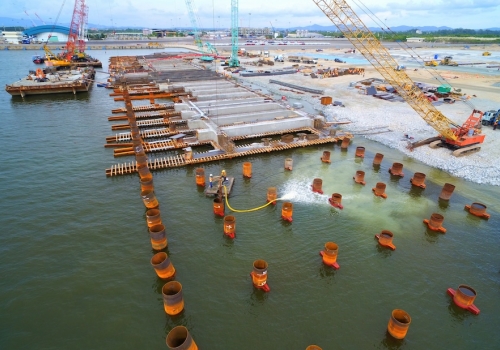
Stop worrying about weak ground. Let me show you how this foundation works and why it matters for your next project.
Dealing with soft soil is a nightmare. It delays schedules and eats your budget. But steel piles cut through the mess to give you solid support. You should choose a pipe pile foundation because it handles massive loads, resists bending, and installs quickly. It works perfectly in poor soil, high water tables, and tight spaces, making it a top choice for large buildings and bridges.
In my 18 years in the construction industry, I saw many projects almost fail due to mud. Once, we had a port project with terrible soil. We switched to steel pipes, and it saved us weeks of work.
Main benefits
· Fast installation speed
· Great bending resistance
· Easy to inspect after driving Steel pipes give you options. You can leave them open at the bottom or close them with a steel plate. Open-ended pipes cut through hard layers easily. Closed-ended pipes push the soil aside and create more friction. This friction holds the pipe tight in the ground.
Here is a simple look at how steel compares to concrete.
| Feature | Steel pipe pile | Concrete pile |
|---|---|---|
| Material cost | Higher | Lower |
| Install speed | Very fast | Slow |
| Weight | Light | Heavy |
| Break risk | Very low | High |
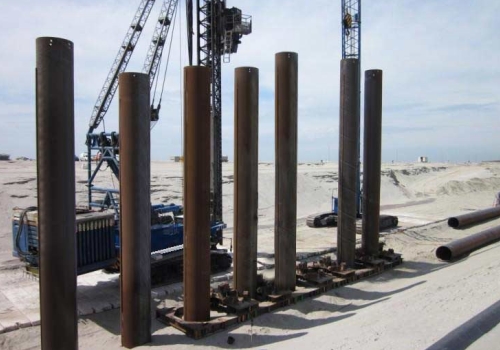
Installation seems complex. Bad methods break piles or waste time. I use a simple process to make sure every pipe goes down perfectly. We install steel pipe piles by driving them into the ground using large impact hammers. Sometimes we vibrate or press them in. After reaching the right depth, we clean the inside and fill it with concrete for extra strength.

Getting the pipe into the ground the right way is the most important part of the job. If you use the wrong hammer, you damage the steel.
· Driving with impact hammers
· Vibrating into soft soil
· Drilling and placing I always check the soil report first. If the soil is very hard, we use a heavy diesel hammer. For a standard 24-inch pipe, we might use a hammer that drops 10,000 pounds from a height of 10 feet. This gives enough force to push the pipe down without bending the top.
1. Mark the exact spot on the ground.
2. Lift the steel pipe with a crane.
3. Place the pipe in the guide leads.
4. Hit the top of the pipe with the hammer.
5. Weld another pipe on top if you need more length.
6. Stop driving when the pipe hits hard rock. Sometimes, we fill the empty pipe with concrete and rebar (steel bars). This stops rust on the inside and makes the whole foundation much stronger. We also check the welds carefully. Good welds keep the long pipes straight and strong under the ground.
You still have doubts. Wrong choices here mean disaster for your project. Here are the answers to the most common questions I get asked. People often ask about costs, lifespan, and soil types for pile foundations. Steel pipe piles last over 50 years, cost around $30 to $60 per foot depending on the grade, and work in almost any bad soil condition.
Over the years, I talk to many engineers and buyers. They all ask the same basic questions before they buy materials. I want to share these answers with you so you can make a smart choice for your site.
Q: How long does a pipe pile foundation last?
A: A steel pipe pile foundation easily lasts 50 to 100 years. We often coat the outside with special paint or use cathodic protection to stop rust in wet soil.
Q: Can I use steel pipes in salt water?
A: Yes. Steel pipes are the best choice for ports and bridges over salt water. You just need to add a thick anti-corrosion layer or use a thicker steel wall to handle the slow rust over time.
Q: How do I know the pile can hold the building?
A: We do a load test. We put heavy weights on top of one test pile and measure if it sinks. If it stays still under double the planned weight, it is safe to use.
Q: What steel grade should I buy?
A: Most projects use ASTM A252 Grade 2 or Grade 3. Grade 3 is stronger and handles harder driving without breaking.
Q: How do you connect two pipes together?
A: We use full penetration butt welding. A certified welder joins the top of the first pipe to the bottom of the second pipe. This makes the joint as strong as the rest of the pipe.
Centerway Steel has supplied top-quality steel pipes since 1996. We make your sourcing easy and reliable. Contact us today to get the best pipes for your next project.



 English
 Español