Pragmatism, Integrity, Passion

Pragmatism, Integrity, Passion

You feel confused by pipe standards. Picking the wrong pipe causes leaks and wastes money. Read on to master the exact specs you need for safe piping systems. astm a53 erw pipe is the standard specification for electric-resistance-welded carbon steel pipe. We use it in mechanical and low-pressure fluid applications. It specifies requirements for chemical composition, mechanical strength, and dimensions. This ensures the safe transport of water, steam, and air.
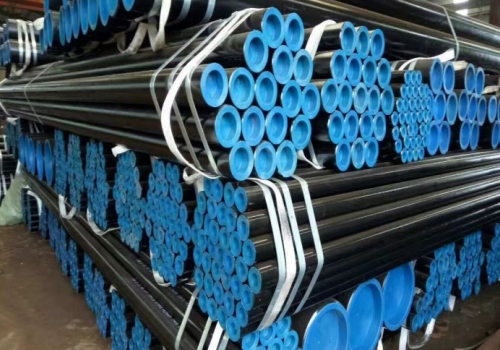
You might think all steel pipes look the same. But that mistake can ruin a project. I will show you the hidden details in the specifications. You will never buy the wrong pipe again.
You take a risk when you order basic pipe. Suppliers might send weak materials. I will help you choose the right type and grade for your system. Type E is the standard electric-resistance-welded option. It features a heat-treated weld seam. Grade B is the industry default choice. It offers a higher yield strength than Grade A. This makes Grade B ideal for structural and pressure piping.
ASTM A53 covers three distinct types of manufacturing processes. You must specify the type. Suppliers might choose the cheapest option if you do not specify. Type E uses a high-frequency electric current to bond the steel edges. We do not add filler metal. We heat-treat the weld seam after welding to remove brittle structures. This process makes the pipe strong. Type F uses an older furnace-butt welding method. It is much weaker. You should avoid Type F for pressure systems. Type S is a seamless pipe. It costs much more than ERW.
You must specify the grade when you order astm a53 erw pipe. The grade determines the chemical makeup and mechanical strength. Grade B has more carbon and manganese. These elements add toughness and tensile strength. We almost exclusively stock Grade B at Centerway Steel. It covers all Grade A requirements. It also offers better performance.
| Feature | Grade A | Grade B |
|---|---|---|
| Yield Strength | 30,000 psi | 35,000 psi |
| Tensile Strength | 48,000 psi | 60,000 psi |
| Carbon Max | 0.25% | 0.30% |
| Manganese Max | 0.95% | 1.20% |
Pipe sizes often trick buyers. Measuring a 2-inch pipe and seeing 2.375 inches causes panic. I will explain the nominal size trap clearly to you right now. The Nominal Pipe Size system means actual outside diameters differ from their names. This applies to sizes under 14 inches. Also, ASTM standards allow a specific wall thickness tolerance. The mill can deliver pipe that is 12.5 percent thinner than the nominal wall thickness.
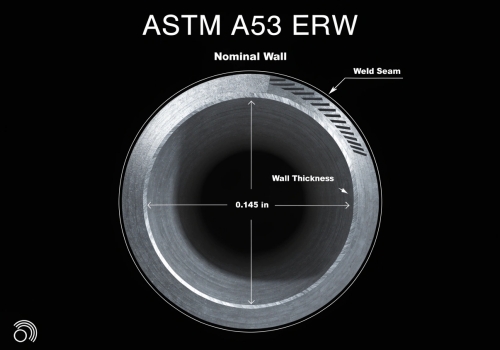
Pipe sizing does not follow common sense. You might hold a 2-inch pipe. You will measure it and find it is actually 2.375 inches. We call this the Nominal Pipe Size (NPS) system. The actual outside diameter is larger than the nominal name for sizes under 12 inches. The actual outside diameter matches the nominal name for sizes 14 inches and larger.
Many customers measure the wall thickness upon delivery. They claim the pipe is too thin. You must check the official ASTM tolerances before you reject a shipment. The standard allows the minimum wall thickness at any point to be 12.5 percent under the nominal wall thickness. You take the nominal thickness and multiply it by 0.125. You subtract that number from the nominal thickness. Your pipe is fully compliant if it meets that bottom limit. Centerway Steel aims for the nominal target. We want you to receive robust products.
| Nominal Size (NPS) | Actual OD (inches) | Schedule | Wall Thickness (mm) |
|---|---|---|---|
| 2 inch | 2.375 | 40 | 3.91 |
| 3 inch | 3.500 | 40 | 5.49 |
| 4 inch | 4.500 | 40 | 6.02 |
| 6 inch | 6.625 | 40 | 7.11 |
Misreading pressure limits causes dangerous blowouts. The factory test pressure is never the safe working pressure. I will clarify this critical difference for you to keep you safe. The ASTM standard lists hydrostatic test pressures for factory quality control only. You must not use this number for system design. You must calculate the actual safe working pressure using the ASME code. This code applies a strict safety factor to the factory test limit.
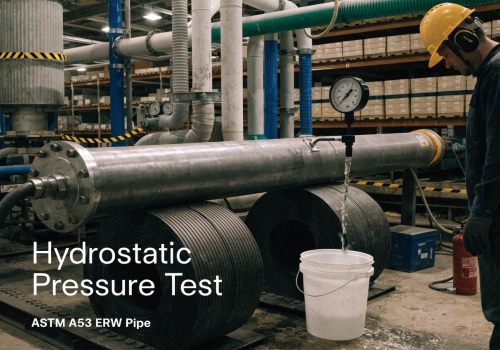
Pressure ratings confuse many buyers. The ASTM A53 standard lists the Hydrostatic Test Pressure. We apply this pressure to the pipe at the factory for five seconds. This test ensures the pipe does not leak. It proves the weld seam is tight. But this is not the working pressure. You calculate the working pressure using the ASME B31 Code for Pressure Piping. The code applies a safety factor. This factor is usually three or four times lower than the test pressure. A 4-inch Schedule 40 pipe must withstand 2210 psi in the factory test. But it might only handle 600 psi in a real steam system.
ASTM A53 is also the main specification for galvanized pipe. We use galvanized pipes in outdoor handrails and water lines. The zinc coating must average 0.55 kg per square meter. This heavy coating provides long-term rust protection. We check the coating visually. The surface must be smooth. It must lack bare spots and blisters.
| Pressure Type | Purpose | Safety Factor Applied | Example Pressure |
|---|---|---|---|
| Hydrostatic Test | Quality Control | No | 2210 psi |
| Working Pressure | System Design | Yes (ASME B31) | 600 psi |
You still have questions before you buy. Unanswered questions delay projects and increase costs. I have gathered the most common queries to give you instant clarity. People often ask about bending and threading astm a53 erw pipe. Grade B pipe bends safely. You can also order it with threaded ends. But you must avoid using this pipe in systems that exceed 400 degrees Celsius to prevent structural failures.
Q: Can I bend this pipe?
A: Yes. You can form and bend Grade B pipe safely. You should check the Flattening Test results on the Mill Test Certificate for very tight bends. We crush a pipe sample during this test. This proves the weld seam does not crack under high stress.
Q: What is the difference between A53 and A106?
A: ASTM A53 works best for general low-pressure use. This includes air, water, and steam lines. ASTM A106 works for high-temperature and high-pressure service. A106 is always seamless. You must not use A53 if your system temperature exceeds 400 degrees Celsius.
Q: Does the pipe come with threaded ends?
A: It can. The standard allows you to order pipe as Threaded and Coupled. We usually supply Plain Ends or Beveled Ends for welding if you do not specify.
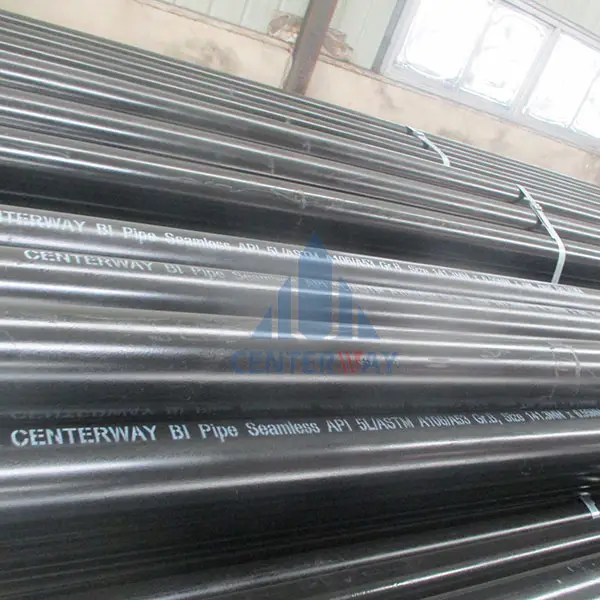
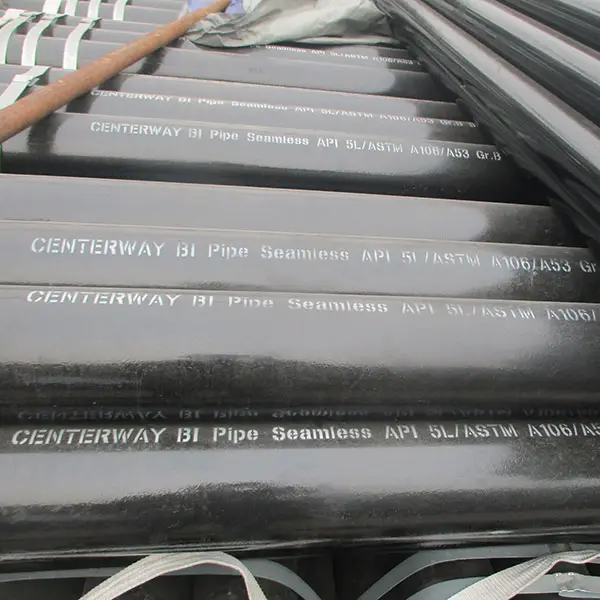
You can easily identify Type E pipe on your site. You just look at the stencil on the side of the steel pipe.
| Stencil Item | Example Value |
|---|---|
| Manufacturer | Centerway Steel |
| Standard | ASTM A53 |
| Grade | Grade B |
| Type | Type E |
| Size | 4 Inch |
You must understand these specifications to ensure safety and perfect fit. I recommend Grade B Type E for reliable projects. Centerway Steel guarantees strict testing on every single pipe.



 English
 Español