Pragmatism, Integrity, Passion

Pragmatism, Integrity, Passion

Are you struggling to find reliable carbon steel pipes for low-temperature projects? Material failures cost you time and money. Let me solve your sourcing headache today. The ASTM A671 GR CC60 specification defines electric-fusion-welded carbon steel pipes designed for atmospheric and low-temperature service. It features a maximum carbon content of 0.18% and requires a minimum tensile strength of 60,000 psi, making it ideal for large-diameter pipeline networks.
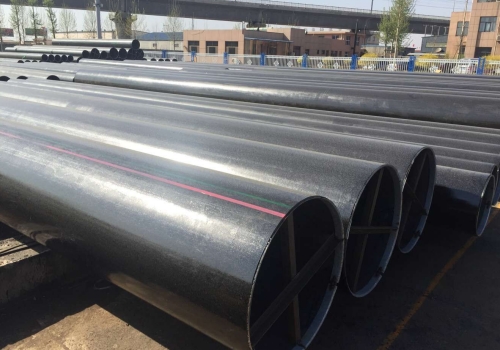
Wait, before you finalize your purchase order, you need to understand the exact grades, classes, and hidden costs that could make or break your pipeline system.
Do complex material codes confuse you? Misinterpreting these numbers leads to ordering the wrong pipes. Here is the exact breakdown I use to buy with confidence. In the ASTM A671 GR CC60 specification, "GR CC60" means carbon steel with a 60,000 psi minimum tensile strength. "CL 22" means the pipe undergoes double submerged-arc welding, 100% radiography testing, and a post-weld stress-relieving heat treatment.
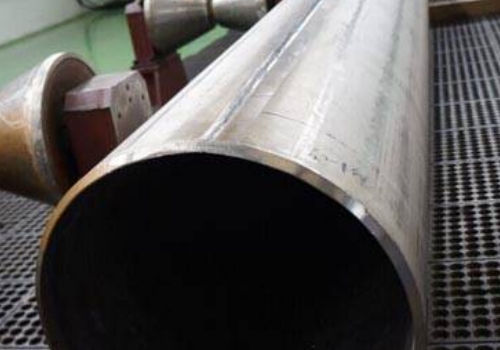
To source the best materials for your construction project, you must break down these codes clearly. I always tell my clients that understanding the class saves them from buying over-engineered or under-tested pipes.
· Class 22: This defines the testing and treating process after we weld the pipe. When you skip heat treatment, you risk leaving residual stress in the weld seam. This stress often leads to cracks during installation. Class 22 eliminates this risk completely. Let me show you a quick comparison of common classes to help you see the value.
| Class Code | Radiography Requirement | Heat Treatment | Cost Impact |
|---|---|---|---|
| Class 12 | None | Stress Relieved | Low |
| Class 22 | 100% X-Ray | Stress Relieved | Medium |
| Class 32 | 100% X-Ray | Normalized | High |
Are you worried about pipes cracking under pressure? Poor mechanical properties cause catastrophic leaks. We test every batch so you never worry about structural failures. This steel pipe features 0.18% max carbon and 0.90% to 1.35% manganese for optimal toughness. Mechanically, it delivers a minimum yield strength of 30,000 psi and a tensile strength of 60,000 psi, ensuring exceptional durability in cold environments.
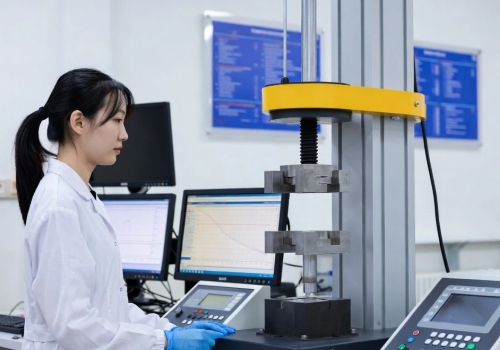
Balancing chemistry directly impacts how well a pipe performs on your job site. I focus on these specific parameters because they dictate the weldability and longevity of your pipeline systems.
· Manganese (0.90-1.35%): Adds toughness to resist impacts at lower temperatures.
· Sulfur and phosphorus (0.035% max): Prevents the metal from becoming brittle over time.
· Yield strength: 30,000 psi minimum.
· Tensile strength: 60,000 psi minimum.
· Elongation: 22% minimum in a 2-inch sample. Here is the exact data we verify before shipping your order.
| Property | Minimum Requirement | Benefit to Your Project |
|---|---|---|
| Tensile Strength | 60,000 psi | Withstands high internal fluid pressure |
| Yield Strength | 30,000 psi | Resists permanent bending under heavy loads |
| Elongation | 22% | Allows slight flexing during ground shifts |
Unsure if this pipe fits your specific site requirements? Picking the wrong application wastes your budget. Let me show you exactly where this pipe excels. You should use these pipes in large water treatment plants, urban pipeline networks, and cooling systems. Their huge diameter capacity and low-temperature resilience make them perfect for moving massive volumes of fluids safely, helping you finish large civil construction projects efficiently. When I work with procurement managers, I notice they often struggle to find pipes large enough for municipal water or cooling water projects. The ASTM A671 GR CC60 specification solves that exact problem.
· Urban water networks: Moves fresh water across long city distances safely.
· Power generation plants: Handles massive cooling water circulation efficiently.
· Coastal port construction: Resists harsh atmospheric conditions near the ocean. The real advantage comes from the physical dimensions. We can produce these pipes with nominal sizes ranging from NPS 16 up to a massive NPS 150 (DN 400 to DN 3800). Wall thickness can reach up to 3 inches. When you order pipes in larger diameters and longer lengths, you drastically reduce the number of field welds required. Fewer welds mean faster installation times and lower labor costs. For a typical 10-mile pipeline, choosing our ultra-long custom lengths can save you weeks of welding time. We build them big so you can build your projects faster.
Do you still have lingering doubts about this material? Unanswered questions delay your procurement process. Here are the clear answers to speed up your sourcing. Common questions revolve around manufacturing methods, temperature ranges, and quality assurance. We produce these pipes using electric fusion welding. They serve lower temperature ranges compared to similar grades. We guarantee quality through strict third-party inspections and comprehensive testing protocols. Over my 18 years in the industry, I have heard every question possible from buyers trying to secure the right materials. To help you make a fast, informed decision, I put together this quick guide based on the questions you probably have right now.
Q1: Is this material seamless or welded?
A1: It is always welded. We use electric fusion welding (EFW) with added filler metal to create a strong, durable seam.
Q2: What is the main difference between A671 and A672?
A2: The temperature rating is the key difference. A671 works best for atmospheric and lower temperatures, while A672 is designed for high-pressure service at moderate temperatures.
Q3: How do you prove the quality of the pipes?
A3: We provide full material test reports (MTRs). Furthermore, authoritative third-party groups like SGS or BV inspect and certify our products before they leave our factory.
Q4: Can I order custom lengths?
A4: Yes, we provide ultra-long lengths to help you reduce installation costs and field welding time.
This standard ensures strong, low-temperature pipeline performance. When you need a reliable efw pipe for your next project, contact Centerway Steel for fast, high-quality, one-stop sourcing solutions.



 English
 Español