Pragmatism, Integrity, Passion

Pragmatism, Integrity, Passion

Are you struggling to find durable components for your complex pipeline projects? You are not alone in facing these engineering challenges. Carbon steel pipe fittings are essential connectors designed to change flow direction, branch off, or change pipe diameter. They offer high durability and pressure resistance for industries like oil and gas. Choosing the right grade and schedule ensures system integrity and longevity.
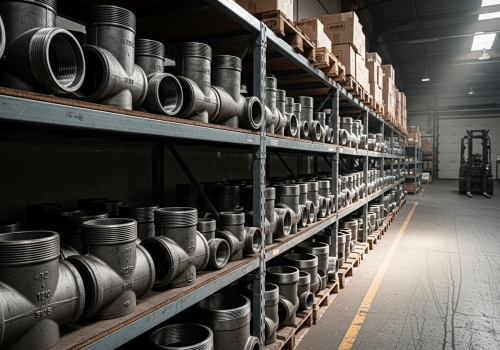
I have seen many projects suffer because purchasing managers overlooked the specific design requirements of these fittings. I want to help you avoid those mistakes. In this guide, I will share my insights on selecting the right fittings for your pipeline infrastructure.
Pipelines face extreme pressure and heavy loads. Weak points in the system can lead to costly disasters. Carbon steel offers superior strength-to-weight ratios compared to other materials. It handles high pressure and temperature effectively, making it the standard for transporting natural gas and petroleum over long distances.
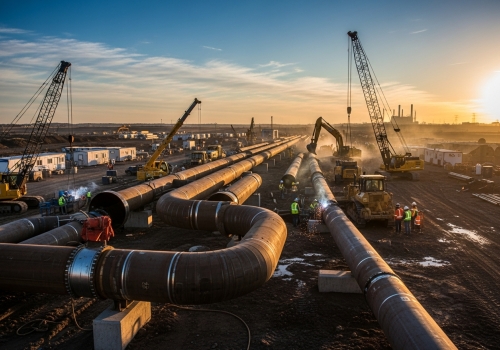
When we look at global infrastructure, the numbers are huge. There are millions of miles of pipelines delivering gas and liquid petroleum. These systems need to be efficient. Carbon steel pipe fittings are the joints that hold this massive network together. They ensure the flow stays smooth and the companies stay profitable. The main reason we choose carbon steel is durability. It is tough. It can handle the internal pressure of the fluid and the external weight of the earth or structure above it. In my experience at Centerway Steel, providing fittings for heavy thickness requirements is key. If a fitting is weak, it becomes a leak point. Leaks harm the environment and stop production. I often explain to my clients that carbon steel is not just one thing. It comes in different grades. For example, ASTM A234 WPB is very common for moderate and high-temperature services. It provides the mechanical properties needed for most standard applications. Here is a simple comparison of why we often choose Carbon Steel over other materials for main transport lines:
| Feature | Carbon Steel Fittings | PVC/Plastic Fittings | Stainless Steel Fittings |
|---|---|---|---|
| Strength | Very High | Low | High |
| Pressure Rating | Excellent for High Pressure | Low Pressure only | Excellent |
| Cost | Cost-Effective | Cheap | Expensive |
| Heat Resistance | High | Low (Melts/Deforms) | Very High |
| Main Use | Oil & Gas, Structural | Water, Residential | Food, Chemical |
Rust eats away at profits and safety. Ignoring the operating environment leads to rapid failure. While strong, plain carbon steel can rust. Engineers must select appropriate surface treatments like galvanizing, painting, or specific coatings. High-carbon variants offer different resistance levels but require protection against moisture.
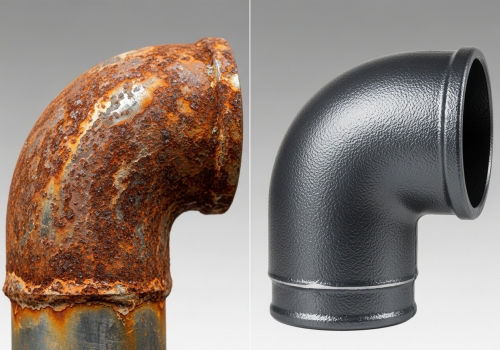
It is true that high-carbon steel is hard, but corrosion is still a big enemy. If your project is near the coast or in a humid area, you need to be careful. I always ask my customers about the environment where the pipes will sit. Engineers have to design for this. It is not just about picking the shape; it is about picking the protection. For carbon steel pipe fittings, we often apply special coatings. The most basic is black paint or anti-rust oil. But for longer life, we look at other options. One popular method is Hot Dip Galvanizing. This puts a layer of zinc over the steel. It stops water from touching the iron, so it does not rust easily. Another option is FBE (Fusion Bonded Epoxy) coating. This is common in underground pipelines. We also have to think about the chemical composition. Some carbon steels have small amounts of other elements added to help, but they are not stainless steel. If the fluid inside is corrosive, like sour gas, we need specific material grades that resist cracking. At Centerway Steel, we ensure the coating matches the project spec. If you buy a strong fitting but use the wrong paint, it will fail. Here is a breakdown of common coatings we manage:
· Black Painting: Basic protection, looks good, offers mild resistance.
· Hot Dip Galvanized: Very strong protection. excellent for outdoor/exposed lines.
· 3PE (3 Layer Polyethylene): The best for buried pipelines. Very durable.
One shape does not fit all. Wrong angles or sizes ruin the flow efficiency of your system. Engineers customize fittings based on flow dynamics. Common types include elbows for direction, tees for splitting flow, and reducers for size changes. The design must minimize turbulence and pressure drop. When I work with EPC companies, we spend a lot of time on the "BOM" or Bill of Materials. The engineers have a plan for the application. They look for weaknesses in the flow. They need the liquid or gas to move seamlessly. We deal with three main connection types for carbon steel pipe fittings:
1. Butt Weld: The strongest connection. We weld the fitting directly to the pipe. This is best for high pressure.
2. Socket Weld: Good for smaller pipes. The pipe slides into the fitting.
3. Threaded: Screwed on. Good for low pressure or places where welding is dangerous. Then we look at shapes.
· Elbows: These change the path. We have 90-degree and 45-degree elbows. We also have "Long Radius" (LR) and "Short Radius" (SR). LR is better for flow; SR is better for tight spaces.
· Tees: These split the flow. An "Equal Tee" has openings of the same size. A "Reducing Tee" has a smaller opening on the branch.
· Reducers: These change the pipe size. "Concentric" reducers line up the center. "Eccentric" reducers keep the bottom or top flat (good for pump inlets). I always emphasize that we can produce large diameter and heavy thickness fittings. Standard fittings are easy, but custom heavy-duty ones require real skill. We make sure the wall thickness matches the pipe exactly so there is no step inside the line.
| Fitting Type | Function | Key Design Factor |
|---|---|---|
| Elbow (90°/45°) | Changes direction | Radius (Long vs. Short) |
| Tee | Splits or combines flow | Branch size (Equal vs. Reducing) |
| Reducer | Connects different sizes | Alignment (Concentric vs. Eccentric) |
| Cap | Closes the end of a pipe | Shape (Ellipsoidal vs. Flat) |
A single defect can stop a huge project. You cannot risk low quality in critical infrastructure. Rigorous testing is mandatory for every batch. This includes hydrostatic testing, ultrasonic testing, and checking chemical composition. Reputable suppliers use third-party inspections to verify compliance with international standards like ISO and API. Quality is not just a word; it is a process. At Centerway Steel, we treat every fitting like it is going into our own home. We follow strict rules. We have ISO 9001 certifications, but we go further. First, we check the raw material. The steel plate or pipe we use to make the fitting must be perfect. We check the chemicals—Carbon, Manganese, Sulfur, Phosphorus. If the raw material is bad, the fitting is bad. During manufacturing, we use heat treatment. This is crucial. When you bend steel to make an elbow, it gets stressed. We heat it up and cool it down carefully (Normalizing or Tempering) to relieve that stress. This makes the metal strong and tough again. Then comes the testing. We do Non-Destructive Testing (NDT).
· Ultrasonic Test (UT): Uses sound waves to find cracks inside the metal.
· Magnetic Particle Test (MT): Finds cracks on the surface.
· Visual Inspection: Checking dimensions. Is the bevel correct? Is the diameter right? We welcome third-party inspectors. SGS, BV, TUV—we work with them all the time. They come to our factory and sign off on the quality. This gives you, the purchasing manager, peace of mind. We also focus on traceability. Every fitting has a heat number marked on it. You can trace that number back to the mill that made the steel. This is vital for oil and gas majors like Shell or ExxonMobil.
Carbon steel pipe fittings are vital for efficient, safe, and profitable pipeline projects. You must consider durability, corrosion protection, correct design, and strict quality control. At Centerway Steel, we provide these integrated solutions to help you succeed.



 English
 Español