Pragmatism, Integrity, Passion

Pragmatism, Integrity, Passion

Corrosion failures in offshore and chemical projects cost millions in repairs and delay schedules. You need a material that guarantees longevity under extreme pressure and heat without breaking your budget. Nickel alloy 625 seamless pipe offers superior resistance to oxidation and corrosion in severe environments, ranging from cryogenic temperatures to 982°C. Its high molybdenum and niobium content ensures exceptional strength and toughness, making it the standard for marine, aerospace, and chemical processing industries.
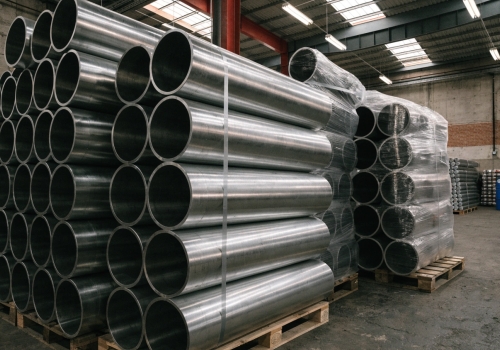
Many suppliers claim to offer top-tier alloys, but few understand the intricate details of heat treatments and standards. I see many procurement managers struggle to define the exact specifications they need. This leads to wasted budget or materials that do not fit the project requirements. I will walk you through exactly what you need to know about this alloy to avoid costly procurement mistakes.
Selecting the wrong alloy for acidic or seawater environments leads to rapid pitting and stress cracking. You must understand the chemical makeup to ensure project safety and longevity. The resistance comes from a minimum 58% Nickel content combined with Chromium and Molybdenum. This matrix prevents oxidation and chloride-induced stress corrosion cracking, providing stability where stainless steel often fails.
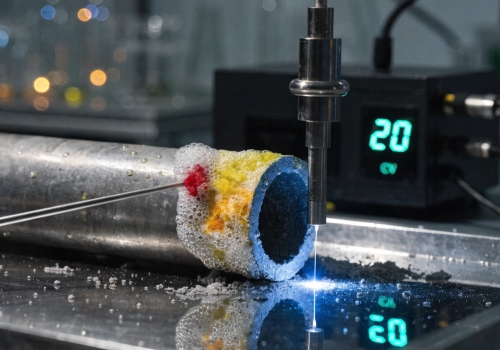
I have seen many projects where standard stainless steel failed within months due to chloride attacks. This is why nickel alloy 625 seamless pipe is the superior choice. The material, also known as UNS N06625, is a solid solution strengthened superalloy. The strength does not come from heat treatment alone. It comes from the hardening effect of Molybdenum and Niobium on the Nickel-Chromium matrix. You need to pay attention to the chemical composition during inspection. The combination of elements creates a barrier against inorganic acids and high-temperature oxidation. In my experience at Centerway Steel, we ensure every pipe meets ASTM B444 standards. The density is 8.4 g/cm3, and the melting point reaches up to 1350°C. This allows the pipe to perform in environments up to 1093°C (2000°F). When you review the Mill Test Certificate (MTC), you must verify these specific ranges to ensure the material is genuine. Here is a breakdown of the chemical requirements you should look for:
| Element | Content Percentage |
|---|---|
| Nickel (Ni) | 58.0% min |
| Chromium (Cr) | 20.0% to 23.0% |
| Molybdenum (Mo) | 8.0% to 10.0% |
| Niobium + Tantalum (Nb + Ta) | 3.15% to 4.15% |
| Iron (Fe) | 5.0% max |
| Carbon (C) | 0.10% max |
Confusing heat treatment grades can result in pipes that fail under high-temperature creep. You need to specify the correct grade on your purchase order to match the application. Grade 1 is annealed for service temperatures up to 593°C, offering better tensile properties. Grade 2 is solution annealed for temperatures above 593°C, providing necessary resistance to creep and rupture.
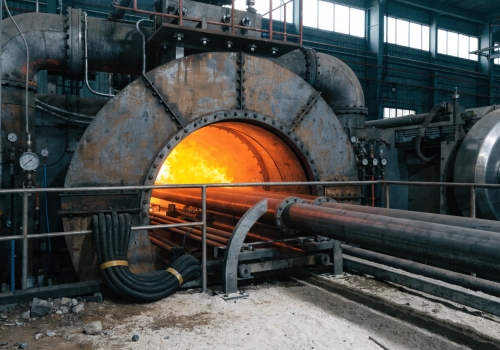
I often receive inquiries where the client does not specify the grade. This is a critical oversight. The ASTM B444 standard for nickel alloy 625 seamless pipe divides the material into two distinct grades based on heat treatment. The difference dictates the mechanical strength and the suitable operating temperature. If your project involves low-temperature corrosion resistance, such as seawater piping or chemical processing below 1100°F (593°C), you should choose Grade 1. Grade 1 is annealed at a lower temperature (around 871°C). This process maximizes tensile and yield strength. If your application involves high-pressure steam, engine parts, or nuclear reactors operating above 1100°F, you must choose Grade 2. Grade 2 is solution annealed at a minimum of 1093°C (2000°F). This high-temperature treatment coarsens the grain structure. It creates better resistance to creep and rupture over long periods of heat exposure. You must check the MTC carefully when the goods arrive. The mechanical values will tell you if the correct treatment was applied.
| Grade | Heat Treatment | Application Temp | Tensile Strength (Min) | Yield Strength (Min) |
|---|---|---|---|---|
| Grade 1 | Annealed | Up to 593°C (1100°F) | 827 MPa (120 ksi) | 414 MPa (60 ksi) |
| Grade 2 | Solution Annealed | Above 593°C (1100°F) | 690 MPa (100 ksi) | 276 MPa (40 ksi) |
Choosing the wrong grade can lead to mechanical failure. Grade 1 pipes used in Grade 2 applications may suffer from creep rupture. Grade 2 pipes used in Grade 1 applications may not meet the minimum yield strength requirements.
Over-specifying materials hurts your project's bottom line, while under-specifying risks catastrophic safety failures. You must balance performance needs with material costs effectively to optimize your procurement. While Alloy 625 offers higher strength and better pitting resistance due to more Nickel and Molybdenum, Alloy 825 is a cost-effective alternative for moderately aggressive environments. The choice depends entirely on specific media severity.
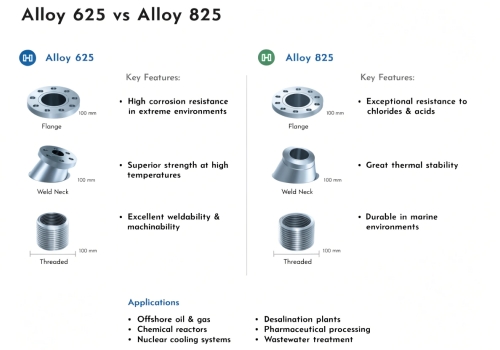
I know that cost is a major challenge for you as a purchasing manager. Nickel alloy 625 seamless pipe is expensive because of its high nickel (58% min) and molybdenum content. Sometimes, you might not need that level of protection. Incoloy 825 (UNS N08825) is a valid alternative for less severe conditions. Alloy 825 contains only 38% to 46% Nickel. It also includes Copper and Titanium. It performs well in sulfuric and phosphoric acids. It resists stress corrosion cracking. But, it is not as strong as Alloy 625. It also has lower resistance to localized pitting in highly concentrated chloride environments. If your budget is tight but you need the surface protection of Alloy 625, I suggest looking into Clad or Lined pipes. We can bond a layer of Inconel 625 inside a standard Carbon Steel (like API 5L X65) pipe. This gives you the strength of carbon steel and the corrosion resistance of Inconel 625 on the wetted surface. This solution saves a significant amount of money compared to solid alloy pipes. Here is a quick comparison to help you decide:
| Feature | Alloy 625 (UNS N06625) | Alloy 825 (UNS N08825) |
|---|---|---|
| Nickel Content | 58% Minimum | 38% - 46% |
| Key Elements | Molybdenum + Niobium | Copper + Titanium |
| Main Strength | High Temp & Severe Pitting | Moderate Acid & Stress Corrosion |
| Cost | High | Moderate |
| Best Use | Offshore, Aerospace, Severe Marine | Chemical Processing, Acid Tanks |
At Centerway Steel, we supply both. We help you evaluate the trade-offs. We ensure you get the right material for the specific pressure and corrosive media of your project.
Nickel Alloy 625 seamless pipe provides unmatched corrosion resistance and strength for critical projects. Verify the chemical composition, select the correct heat treatment grade, and consider clad options to optimize costs.



 English
 Español