Pragmatism, Integrity, Passion

Pragmatism, Integrity, Passion

Are you struggling with rising costs and tight schedules on your deep excavation projects? Finding the right materials to hold back soil and water can make or break your budget.
Using steel sheet piles in construction provides a fast, strong, and highly durable solution for temporary or permanent retaining walls. These interlocking steel sections cut down installation time significantly compared to traditional concrete walls, saving you massive labor costs.
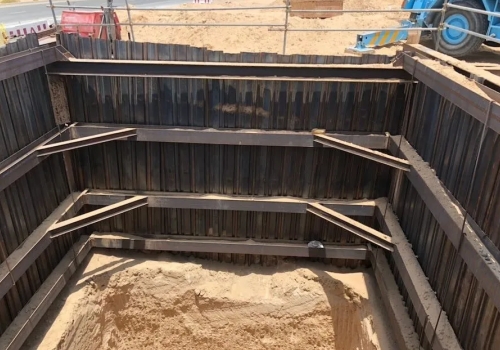
I remember a major port expansion project we handled recently for a contractor in Australia. They faced heavy pressure from the Brisbane River and a brutal timeline. They needed a reliable foundation system that could handle high lateral loads immediately. I stepped in and recommended our high-strength Z-type hot-rolled steel sheet piles. We shipped the complete pipeline and piling system directly to the site. The client saved three weeks on their schedule because they did not have to wait for poured concrete to cure. That project proved to me how much the right piling solution changes the game.
Are you confused about which sheet pile shape will actually hold up under your specific soil pressure? Choosing the wrong profile can lead to wall bending, structural failure, or massive overspending.
The geometry of a steel sheet pile determines its strength, weight, and how well it resists bending under heavy earth or water loads. Matching the right type to your ground conditions ensures maximum safety and the lowest material cost.
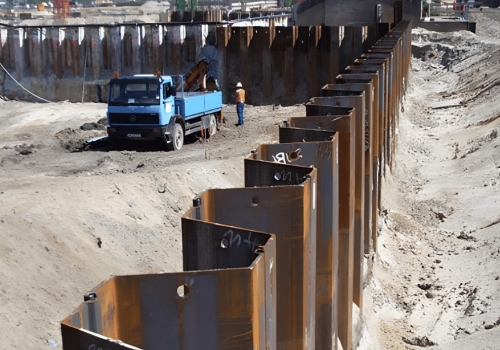
Every construction project has unique load demands. We break down the choices by looking at how the shape handles stress. Z-type piles are the most popular choice for heavy-duty work. The locks are placed on the outermost edges, which increases the strength-to-weight ratio. Flat web piles work differently. They form circular cells that hold together through the tensile strength of their locks, making them perfect for massive marine structures. Pan-type piles are much smaller and cold-formed, so we only use them for short, lightly loaded walls where space is tight.
| Sheet Pile Type | Primary Structural Mechanism | Best Application | Max Load Capability |
|---|---|---|---|
| Z-Type (NZ/PZ) | High bending resistance due to deep corrugation | Deep excavations, port walls, cofferdams | Very High |
| Flat Web | High tensile interlock strength for hoop stress | Marine gravity cells, large bulkheads | Extreme (Large Cells) |
| Pan Type | Light geometry for quick installation | Shallow trenches, short retaining walls | Low to Medium |
The way the steel is made changes how tight the wall will be. Hot-rolled piles are shaped at very high temperatures, which creates a tight, thick interlock. This tight seal is crucial if you are working in hard soils or need a watertight barrier. Cold-formed piles are rolled at room temperature. They work well for standard earth retention, but their locks are slightly looser. If you have a high water table, hot-rolled is always the safer bet.
Are you looking for a way to eliminate expensive temporary shoring and speed up your underground builds? Traditional multi-step excavation methods often waste time and create unnecessary risk for your team.
Implementing sheet piles in construction works perfectly for support of excavation, levee strengthening, marine breakwaters, and permanent underground parking garage walls. They act as both the temporary shoring and the final structural wall at the same time.
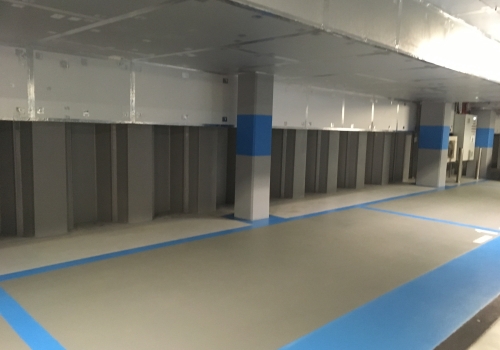
When we look at modern engineering, steel sheet piles serve two main purposes. They either keep water out or hold soil back. In marine environments, they build durable bulkheads and breakwaters that resist wave action. On civil sites, they form bridge abutments and stabilize slopes.
Using steel piles as permanent foundation walls is a strategy that is changing project economics globally. In our recent Australian projects, the engineering teams stopped using temporary shoring altogether. They drove our permanent steel sheet piles, excavated the earth, and used the steel as the outer wall of the structure. This removed the step of pouring a secondary concrete wall.
Steel is infinitely recyclable. If you use sheet piles for a temporary cofferdam, you can pull them out of the ground when you finish and drive them into your next job site. Even at the end of their long life cycle, the steel goes back into an electric arc furnace to become new steel. This circular process reduces waste and helps your project meet strict environmental requirements easily.
When you need a reliable partner for your next project, Centerway Steel delivers first-class steel sheet pile systems alongside our complete line of matching pipes, fittings, and valves to give you a true one-stop sourcing experience.
Using steel sheet piles in construction speeds up your timeline, reduces project costs, provides extreme structural strength, and delivers an infinitely recyclable, highly sustainable foundation solution.



 English
 Español